
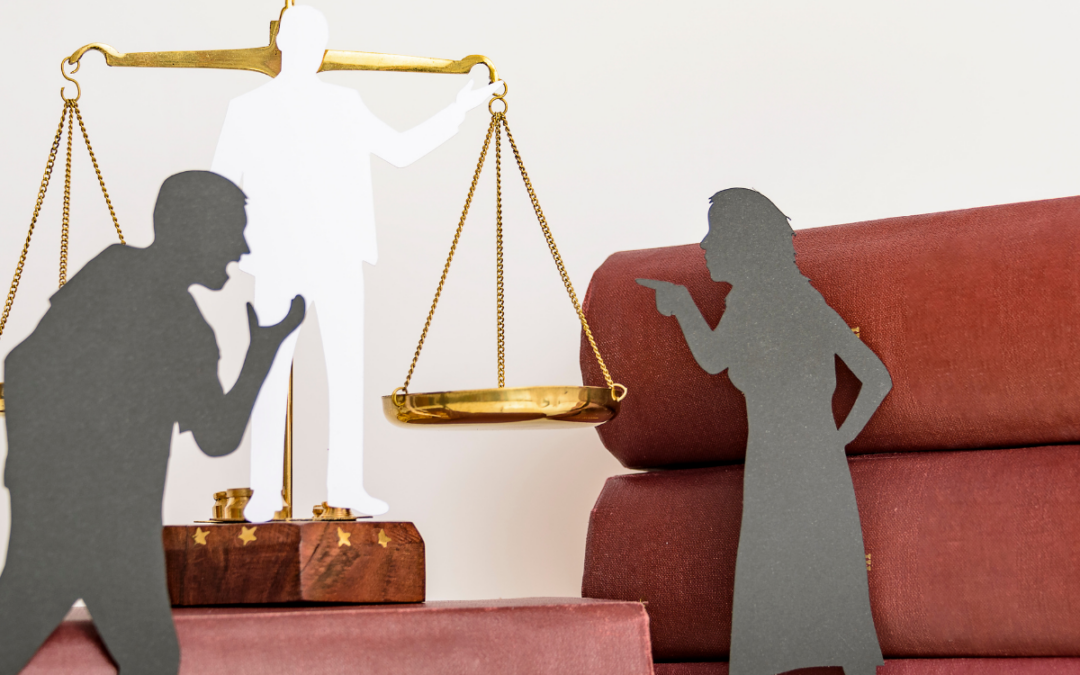
In many conversations, it seems as if we are listening, but often we are just waiting for our turn to speak. That does not work in mediation.
Real progress only happens when people feel heard – not just in what they say, but in what they mean. Listening in mediation is therefore much more than just being quiet while the other person speaks. It is searching for the message behind the words, for the need that lies behind every point of view.
Hearing is not the same as listening.
When a conflict arises, emotions and beliefs often take over. Everyone has their own story, their own truth. And while we talk, we usually listen in order to respond, defend or persuade. We hear what the other person is saying, but miss why they are saying it.
In mediation, that is precisely where the difference is made. A mediator does not listen to agree or judge, but to understand. Behind every statement lies a feeling, and behind every feeling lies a need. Those who dare to explore that layer open the door to genuine connection.
The message and the need.
Imagine: during mediation, someone says, "You never listen to me."
At first glance, this seems like a reproach. But when we listen further, we hear something else. Perhaps what that person is actually saying is: "I would like my opinion to matter." The need is not to reprimand the other person, but to be recognised.
That distinction is crucial. When the mediator makes that clear, the tone of the conversation changes. Where there were previously accusations, there is now room for understanding. And only then can work begin on finding lasting solutions.
The role of the mediator.
The power of mediation lies in listening attentively.
The mediator creates a safe space in which everyone is allowed to speak and be heard. By asking questions, mirroring and searching together for what is really being said, the mediator helps to identify the underlying needs.
This requires calmness, empathy and neutrality. It does not mean that emotions are pushed aside – on the contrary. They are given space so that they no longer determine the direction of the conversation, but can be part of it.
From words to connection.
When people feel heard, the need to be right disappears. What remains is a willingness to seek solutions together. That is when mediation shows its full power: not in the outcome, but in the process that leads to mutual understanding.
A solution built on genuine recognition is more sustainable than one based solely on positions. Listening is therefore not just a step in the process – it is its foundation.
In conclusion
Listening is not a technique. It is an attitude.
A willingness to see the other person, even when it is difficult.
In mediation, listening is the first step towards recovery, respect and cooperation.
Anyone who takes the step towards mediation deserves a conversation in which not only their words are heard, but also the person behind them.
"Most conflicts arise not from what we say, but from what we do not hear."
The art of listening – beyond words to connection.